


Now it is an open secret that I currently have a manuscript under review for publication. This book is a theological anthropology of the human person, a comprehensive theological exploration of what the human was created for and what the world we actually live in looks like. Simply put, it is the presentation of a Christian worldview.
Writing this book really stretched me in so many ways; not only did I have to research topics outside of my niche, but I also had to rewrite it twice after I finished it the first time. It also taught me a lot about the Christian publishing world.
I think the biggest challenge was that this wasn’t the book I set out to write, yet it was the one I needed to write. I needed to present what I believed was a proper Christian anthropology to the world if I wanted to make a lasting impact. Yes, you can teach people theological doctrines that impact them, but without grounding them in what it means for the Christian life, it can become a fickle doctrinal point held without consequence.
If you’re new to The Altar of Moriah, welcome! My name is Corné Gieselbach. I’m a theologian, author, and Chair of the Undergraduate program at TheosSeminary, with a PhD candidacy in historical dogmatics beginning this October. I publish every week on Monday, Wednesday and Friday. Paid subscribers receive every post; this includes Academy posts and devotional posts. Free subscribers receive weekly Wednesday essays. If this piece resonates, consider subscribing to support the work.
The book is presented in a way that hopefully exists holistically and without contradiction because so much of what modern Christianity has become has been a Christianity that can teach you what to believe, help you memorise a statement of faith, yet not tell you why it matters existentially for your everyday life. That gap is now a market that somebody is selling into it, and doing very well.
This has produced a Christianity that has largely assimilated into a modern worldview of build-a-bear worldviews and confessions of faith. You are a Baptist, but you believe in real presence? You can just stay Baptist and hold a fully memorial view of baptism, yet affirm real presence, not knowing that you cannot be sacramental when it suits you and not when it doesn’t.
This cherry-picking of doctrines has led to the creation of what I call personal magisteriums. It doesn’t matter what denomination you are: Catholic, Protestant, Orthodox, all think we know better in some way and are critical of a teaching we disagree with. Protestants embrace theosis as sanctification when it literally doesn’t make sense within their soteriology. Catholics are critical of Vatican II or scrutinise every word of the Pope. Orthodox claim they have held an unchanging line of faith when their own documents and liturgical practices communicate development.
We are all guilty of this. Our modern Christianity, filled with access to information, has made us well aware of what we believe, yet we have failed it by not understanding the why. And this matters because what we believe shapes the way we live out our faith, and it shapes the world.
The modern revolutions that have plagued our times are all due to our own lack of adherence to the ancient witness of the Church on human dignity.
The Industrial Revolution ravaged personhood with the idea that persons are what they produce, consume, spend, and profit from. Such values lead people to that envious glance to see who has “made it” and who hasn’t. What do the neighbours drive? Do they have a shore house? What do their parents do? How much do they make? What academy’s jacket does their son wear? Education becomes simply a race to get grades, extracurricular points, and awards so the student can go to a private high school, get into an Ivy League university, graduate with honours, and make double the parents’ salary. This is what a “person” has become.1
The sexual revolution quickens the storm. The pursuit of pleasure becomes the primary focus along with the portfolio. Whatever feels good rules the day. Marriage, family, and children are obstacles to pleasure, so they are dispensed with. This is what it is to be a human person—accumulating things and pleasures. Unless you have those, you are less a person, and your personal identity is incomplete. Unless you are “feeling good”, you are not a full person.
The technological revolution surged in on top of the first two systems. To “you are what you acquire” and “you are what you feel,” it adds the steroidal rush of “now do it all as quickly as you can.” The greed of the Industrial Revolution and the hedonism of the sexual revolution now ride the wave of speed and efficiency. “Personhood” is assigned on the basis of how closely you can conform to a “social construct based on the compelling presence of certain qualities that we determine to be necessary” rather than on inherent capacities.2
You can watch this happen in real time now. Open any app, and you will find the ancient faith arranged for viewing, being sold as an aesthetic product you can purchase without the sacrifice that built and is required of it. This is not the case for every influencer or publication, however. That is what makes it difficult, but there is also no denying it either.
This is the natural conclusion of our allowance of three revolutions to infiltrate our ecosystem without scrutiny. Each one of these three revolutions stripped Christianity of something essential.
The industrial revolution taught us that a person is what he produces; the influencer produces reach. The sexual revolution taught us that a person is what he feels and how he presents himself; his entire trade is a curated self. The technological revolution taught us that a person is how quickly he can do it, and the algorithm rewards nothing else. Christian content did not resist any of this. It performed all of it effectively.
Which brings us back to the personal magisterium. I named it earlier as a habit, but it is more than that. It has become a business model. You do not gather an audience by handing people back to a bishop, or a confession, or a tradition older than your account. You gather one by becoming the authority they have chosen for themselves. Every feed is a small magisterium with a subscribe button. The market did not merely tolerate our cherry-picking. It discovered that cherry-picking produces engagement.
And the worst part about it all is that the church aided these revolutions. All churches except Catholicism have embraced the use of birth control to some degree. Historians have often marked the change of church teaching on birth control as having accelerated the growth of the sexual revolution (Lambeth 1930). Christians supplied the moral framework and vocabulary for human dignity that were twisted during the Industrial Revolution to justify production. And the modern church’s willingness to embrace any technology that might make it more effective at reaching its goals has created a lack of technological literacy within the body.
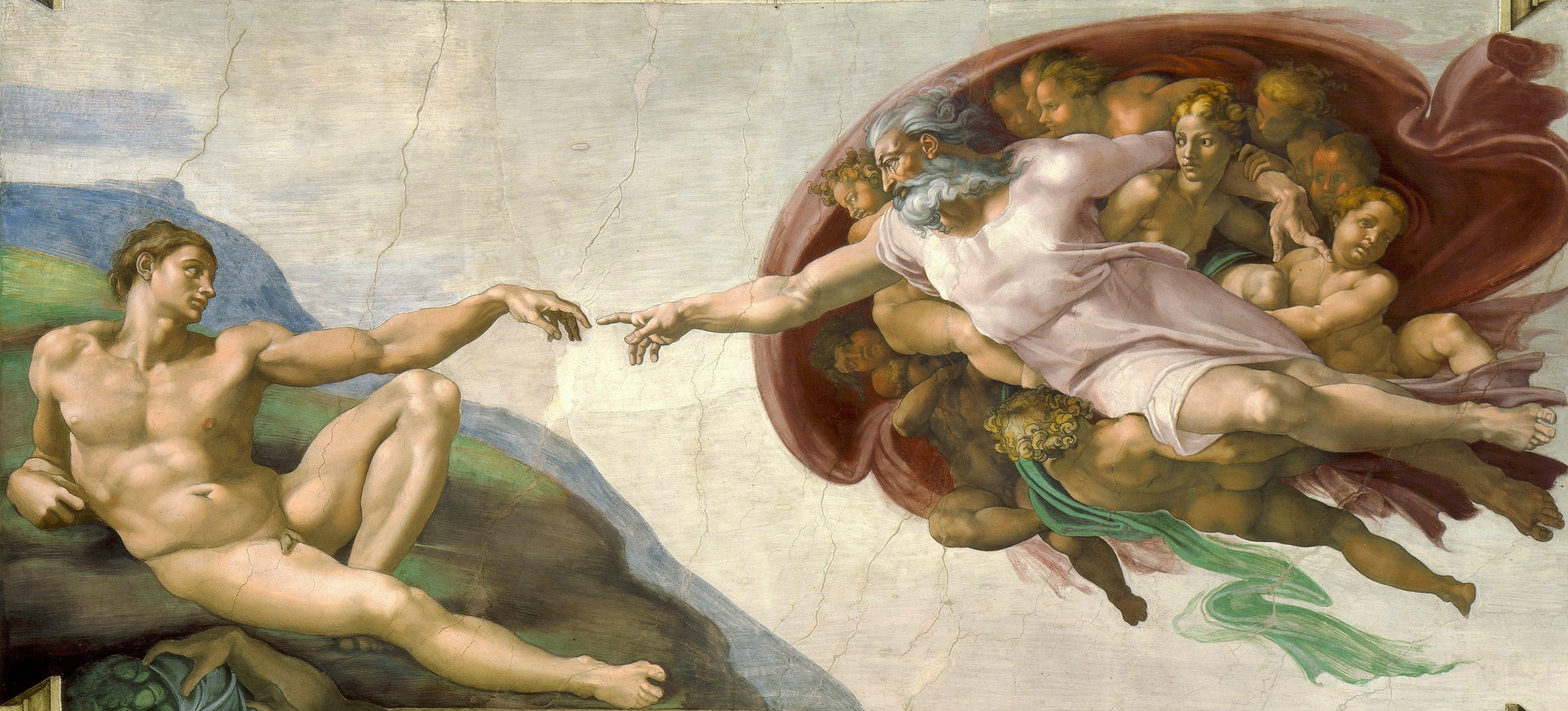
The great failure I believe here lies not in the Church’s witness but in its people. Thomas Merton says in his book The Ascent to Truth that the Church has never truly been harmed institutionally due to external persecution, but has often been weakened through the lack of faithfulness among its people. This is because during our own intellectual squabbles of who is right and who is wrong, we were more concerned with getting our people to recite our catechisms and confession than actually discipling them into holding a Christian worldview.
This is why I wrote my book. A book I believe only I could write. From the perspective of someone who isn’t more concerned with which denomination he belongs to but whether or not he is living the abundant and eternal life that God promised him.3 My goal was to present a comprehensive worldview that would lead to such a life.
When I started writing this book, I had a burden on my heart from the Lord that prompted me to write this book with love. It has nothing to do with my bottom line; I barely make money from book sales, but the people who do read my books are always moved, not because I am a great writer, I don’t believe I am, but it is because I believe that God touches these books with love.
To me it has never been about making more money, although I do appreciate and need the money I do make. It has always been about giving value to people. Even if it is in the majority of the population’s least favourite format to consume content in.
Christianity has been stripped of its ancient, existential and sacramental identity, and the ancient faith was far more concerned with your spiritual health and salvation than with your comfort at church or your standing online. Our faith is one of life through death, not clicks through trends. So much of Christianity has become a product or a modern morality because we have treated it that way.
That is why in my book, I take us back. I take us back to the times before this by drawing on the ancient wisdom of the Church.
Why is this better than the modern witness? I answer that with the words of GK Chesterton:
Tradition means giving votes to the most obscure of all classes, our ancestors. It is the democracy of the dead. Tradition refuses to submit to the small and arrogant oligarchy of those who merely happen to be walking about. All democrats object to men being disqualified by the accident of birth; tradition objects to their being disqualified by the accident of death.4
That is why the Church is the last defender of the dignity of humanity, and it is only possible through the proper discipleship of its members. The Church in this way secures human flourishing by holding the past, present and future in tension with one another and allowing the past and present witness to speak together to what would be beneficial for today and the future.
It is the only institution equipped adequately enough to do this. I did not write this book to win an argument. Arguments have been won before, and the winning changed very little.
The doctrine of the dignity of humanity was never refuted or changed. No church council overturned it, no philosopher successfully dismantled it. It simply went dark. The revolutions did not change Christian minds into believing they weren’t made in the image of God. No, they changed the worldview in which such a sentence could still rightly be understood.
This is why catechesis alone will not save us, and why our confessions, however carefully worded, have not successfully defeated these ideologies. However, the hope of proper discipleship remains.
Discipleship is how worldviews are rebuilt, and that is what tradition does.
My book is not yet in print, but I did want to share some of my heart around it with you. Release is currently unknown, but I will be able to communicate more within the coming weeks.
-Corné
J. Brian Bransfield, The Human Person: According to John Paul II (Boston, MA: Pauline Books & Media, 2010), 32.
Bransfield, The Human Person, 32.
John 10 and John 17 both teach us that it is in this world, through death to self, that we find eternal and abundant life in Christ. It is not just an eschatological promise, but a metaphysical reality of the present moments lived in participation with Christ.
Gilbert K. Chesterton, Orthodoxy. (New York: John Lane Company, 1909), 85.
EASY BUY
let him cook