


“Humilitas est veritas” is a Latin phrase meaning humility is truth, famously attributed to St. Thomas Aquinas. It means that being humble is simply seeing yourself and the world as they really are, without pride or ego. It is a virtue that we can all admit we strive to carry with us.
When we think of this, we think of the parable in Luke 14:7-11 that reads:
7 When he noticed how the guests chose the places of honor, he told them a parable. 8 “When you are invited by someone to a wedding banquet, do not sit down at the place of honor, in case someone more distinguished than you has been invited by your host; 9 and the host who invited both of you may come and say to you, ‘Give this person your place,’ and then in disgrace you would start to take the lowest place. 10 But when you are invited, go and sit down at the lowest place, so that when your host comes, he may say to you, ‘Friend, move up higher’; then you will be honored in the presence of all who sit at the table with you. 11 For all who exalt themselves will be humbled, and those who humble themselves will be exalted.”
If you’re new to The Altar of Moriah, welcome! My name is Corné Gieselbach. I’m a theologian, author, and Chair of the Undergraduate program at TheosSeminary, with a PhD candidacy in historical dogmatics beginning this October. I publish every week on Monday, Wednesday and Friday. Paid subscribers receive every post; this includes Academy posts and devotional posts. Free subscribers receive weekly Wednesday essays. If this piece resonates, consider subscribing to support the work.
There is, in a reading of this passage, this great tension that applies to everyday life. Choose to make yourself humble and less important, and your reward shall be being “exalted.” However, this is precisely the problem. Christ is not teaching about the action one takes but rather the heart posture that produces the action. There are actions that may look humble in themselves, but if they are not accompanied by hearts touched by humility, the actions become self-righteous attempts at seeming pious to onlookers, and therefore the reward is not true exaltation but admiration from the world.
This should call our minds back to another teaching of Christ in Matthew 6:5-6:
5 “And whenever you pray, do not be like the hypocrites; for they love to stand and pray in the synagogues and at the street corners, so that they may be seen by others. Truly I tell you, they have received their reward. 6 But whenever you pray, go into your room and shut the door and pray to your Father who is in secret; and your Father who sees in secret will reward you.1
Which we will unpack more later on. Let it just for now sit in the back of your mind.
The reason why I point it out right now is that I believe that we have held this tension backwards. Humility is not a reward we receive because of our actions, it is God’s grace working in as making us more capacious—the more humble one becomes, the more spacious the heart grows, and the more completely it fills with God’s presence.
The reason behind all this is that according to our Teacher, humility prepares us to receive the manifestation of God.
“You have hidden these things from the wise and the understanding and have revealed them to the little ones (Mt 11:23).
Who are these little ones? They are the humble.… What are we, after all, however great we may be? If we are humble, if we have merited to be counted among the little ones, we shall also merit the happiness of seeing God’s unveiled face. This circles back to St Thomas’s definition of seeing ourselves rightly as the sinners we are, who are completely dependent on God for anything and everything.
Speaking of the centurion who regarded himself as unworthy to receive the Lord into his house, St Augustine says:
“Humility was the door through which the Lord entered to take full possession of one whom he already possessed.”2
Humility is the first. According to the unanimous teaching of the Fathers, the entire construction of Christian perfection is founded upon humility. Without it neither right spiritual life, nor the acquisition of any gifts of the Holy Spirit are possible. What is Christian humility? According to the Gospels, it is first of all poorness of spirit (Mt 5:3)—a state of the soul which proceeds from the vision of one’s own sinfulness and incapability of freeing oneself from the oppression of the passions through one’s own efforts, without God’s help.3
This is the disposition of the humble heart before God. It is one of dependence and recognition of the One who is the great I AM. I am at this point reminded of the story of when C.S. Lewis was asked why an all-powerful God did not just eliminate all evil from the world. Lewis answered that if God did that, we would all cease to exist.
We are often so focused on the postures and actions of others because I believe that the distractions of this world and the lives of each other give us a comforting out from turning inwards and truly seeing our own brokenness. If we spent half the time we spend talking about the lives of others looking inward and quieting our hearts before the Lord and allowing Him to see it, then we would become quite grieved at our brokenness.
It is a sad and uncomfortable truth, and yet never has the world made it easier for us to be so distracted that we never cultivate humility in the hidden place. That is because it is exactly that. A hidden place. No one will reward you for your time spent there; no one will be captivated by your “holiness”, and no one will be impressed by it. The only reward found in the secret place is the heart of God.
And I ask myself all the time. When did that stop being enough? Why is it that every excuse I can find to not enter that place is always sufficient, yet if it were anything else I stood to lose, I would not part with it so easily?
And if I am honest, it is because being there is hard and uncomfortable at times. I become deeply aware of my shortcomings, and it hurts. I realise how much I have chosen other things over God that, in hindsight, never feel worth it, yet my brokenness always manages to convince me that it is.
But the hope that we all have is that God is a good Father who rejoices in our longing and seeking after His presence, and He is quick to forgive those with a contrite heart. And it is in this hidden place in His preferred language of silence that He meets us.
Fr Boniface Hicks reminds us that in our relationship with God, we need to become like little children, indeed, like the humblest one taking the lowest place, desiring to be the lowest of all creatures, even lower than Satan himself! Hiddenness and littleness go together with humility into one perfect disposition of hiddenness in which to better see and hear Him in His hiddenness. This is the kind of love shown and given to us in the poverty and suffering of Christ who lays down His life for us and never comes down from the Cross by engaging Divine power.4
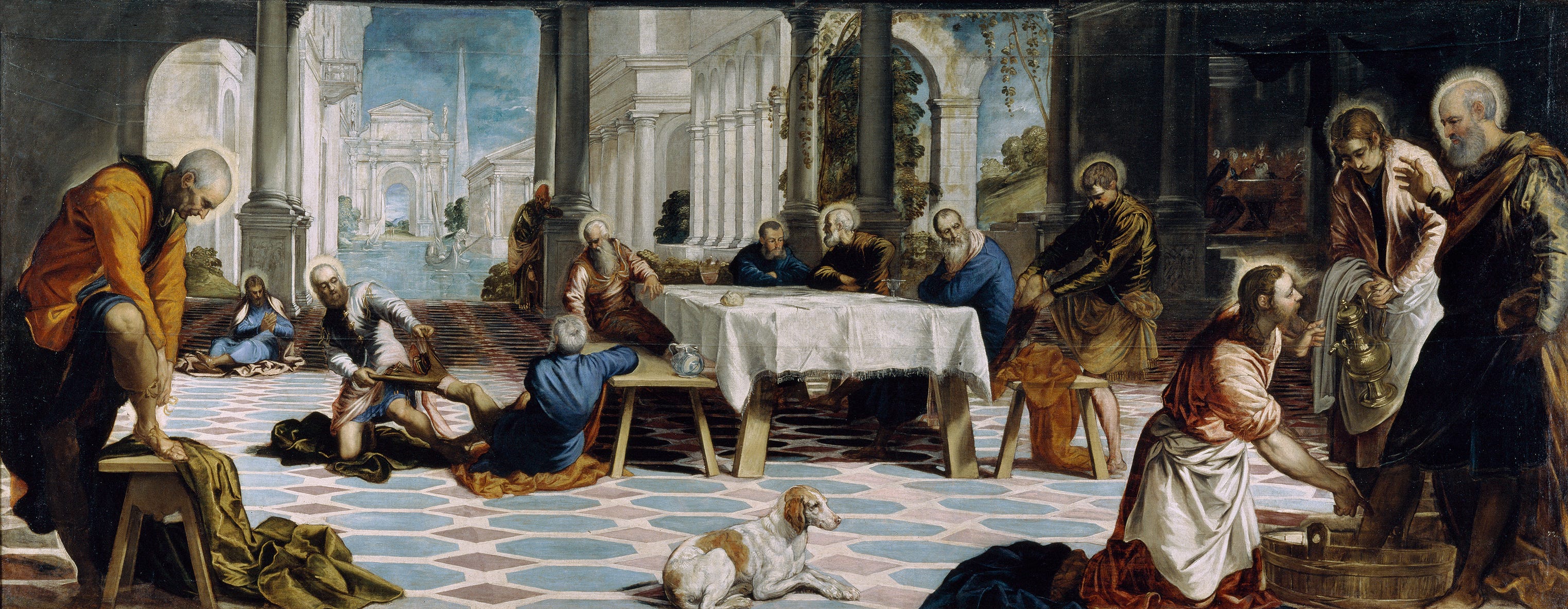
Pope Benedict XVI writes on Jesus’s humility in the washing of the feet and reminds us:
What the Letter to the Philippians says in its great Christological hymn—namely, that unlike Adam, who had tried to grasp divinity for himself, Christ moves in the opposite direction, coming down from his divinity into humanity, taking the form of a servant and becoming obedient even to death on a cross (cf. 2:7-8) —all this is rendered visible in a single gesture. Jesus represents the whole of his saving ministry in one symbolic act.5
Christ divests Himself of His divine splendour; He kneels before us; he washes and dries our soiled feet, in order to make us fit to sit at table for God’s wedding feast.
He kneels before us… God kneels before us. The love and humility of a perfect being who holds the whole world together to willingly kneel before sinners, just so that He could be in relationship with us.
This is because humility and love cannot be separated from one another. Because it is through love that Christ humbled Himself, and it is through love for Him that we are called to act humbly in obedience so that we may carry light into the world. Nowhere is this light better cultivated than in the hidden place, where God comforts, loves and transforms us into who we were always created to be.
I end with this beautiful reminder from Alexander Schmemann:
For if we ask for liberation from sloth, despair, lust of power and idle talk, we are asking for the removal of barriers to love, barriers that prevent love from entering our heart. And chastity, humility, and patience are the building blocks, the roots, the first shoots of love. Therefore, when the word love finally falls upon our ears as if from heaven itself, we already know that love is not simply from God, but is God himself who enters our hearts, which are now cleansed and adorned with chastity, humility and patience, are now prepared to be a temple through the presence, light and all-conquering power of God’s love.6
-Corné
Mt 6:5–6.
Sermon 62/A, 2 (= Morin 6, 2; MA 1:609).
Alexei I. Osipov, The Search for Truth on the Path of Reason (Moscow: Sretensky Monastery; Pokrov Press, 2009), 267.
Thomas Acklin and Boniface Hicks, Personal Prayer: A Guide for Receiving the Father’s Love (Steubenville, OH: Emmaus Road Publishing, 2020), 141.
Pope Benedict XVI, Jesus of Nazareth, Holy Week: From the Entrance into Jerusalem to the Resurrection (Ignatius Press, 2011) 56-57.
Alexander Schmemann, The Church Year: Sermons, trans. John A. Jillions, vol. 2, Celebration of Faith (Yonkers, NY: St Vladimir’s Seminary Press, 2012), 105–106.
Beautifully written xx
really enjoyed this